SEO analysis tools: the technical stack to dominate search engines

Search engine optimisation is not a matter of luck or intuition. It is a discipline based on data analysis, understanding algorithms and monitoring the competition. To turn a website into a real source of qualified traffic, you need to rely on effective analysis tools.
With so many solutions available, here are the essential categories of tools to audit, fix and grow your online visibility.
1. The mandatory foundations: the Google ecosystem
To understand how Google sees your website, start with the tools it provides free of charge. They are the only ones offering data straight from the search engine on your indexing and rankings.
- Google Search Console (GSC): your website's health record. It alerts you to crawling and indexing errors, Core Web Vitals and security issues. Above all, it shows the queries users typed to find you, your clicks and your average position.
- Google Analytics 4 (GA4): if Search Console tells you how visitors arrive, GA4 explains what they do once on the website: engagement rate, journeys, conversions and the most profitable traffic sources.
2. The Swiss army knives of SEO: analysing the market and the competition
To go beyond your own data, all-in-one SEO suites let you study your competitors' strategy and spot new opportunities.
- Semrush or Ahrefs: the benchmarks for competitive analysis. They show the keywords your competitors rank for, estimate their traffic and analyse their backlinks.
- SE Ranking: a popular alternative for precise daily rank tracking, keyword by keyword and city by city, with content optimisation audits.
3. Technical analysis tools: scanning your website's foundations
Quality content is not enough if your website's technical setup prevents bots from reading it properly. Crawlers simulate the visit of search engines to detect technical obstacles.
- Screaming Frog SEO Spider: this software crawls your entire website and produces a complete X-ray: broken links (404 errors), redirect chains, missing or duplicate title and meta tags, images that are too heavy. It is the basic tool for any in-depth technical audit.
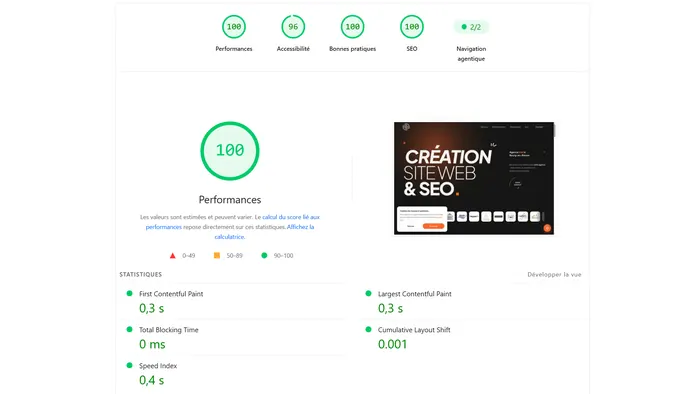
- PageSpeed Insights (and GTmetrix): display speed is among the factors Google takes into account, through Core Web Vitals. These tools measure how your pages load on mobile and desktop and point out what slows them down (see our article on PageSpeed and SEO).
4. Semantic optimisation: speaking the language of search engines (and AI)
Your content must match users' search intent while using the vocabulary algorithms expect.
- YourTextGuru or 1.fr: these tools analyse the vocabulary of your texts and compare it with that of pages already ranking well. They show which terms to add to strengthen the relevance of your articles or sales pages – an asset in the age of AEO and AI answer engines. (Both are mainly geared towards French-language content; tools such as Surfer SEO or Clearscope play a similar role in English.)
Summary table
| Need | Tools | Cost |
|---|---|---|
| Indexing, queries, rankings | Google Search Console | Free |
| Visitor behaviour | Google Analytics 4 | Free |
| Competition and keywords | Semrush, Ahrefs, SE Ranking | Subscription |
| Technical audit | Screaming Frog | Free up to 500 URLs, then licence |
| Speed | PageSpeed Insights, GTmetrix | Free (paid plans for GTmetrix) |
| Semantics | YourTextGuru, 1.fr | Subscription |
Conclusion
Piling up dozens of software tools is not enough to improve your SEO: the real value lies in the ability to cross-reference this data to draw up a prioritised technical and editorial action plan. That is the whole point of an audit, whose steps we describe in our article on search engine optimisation.
Want to know how search engines really see your website? Contact us for a complete technical SEO audit and identify your immediate growth opportunities.
Frequently asked questions
Which free SEO tools should you use first?
Google Search Console and Google Analytics 4 are essential and free. PageSpeed Insights and the free version of Screaming Frog (up to 500 URLs) complement this pair very well for a small website.
Do you need a Semrush or Ahrefs subscription?
For a small business, it is not always necessary on an ongoing basis. These tools are mainly useful during an audit or a content strategy; an agency that has them can share their data with you.
Do tools replace an SEO expert?
No. They provide data and alerts, but you need to know how to interpret them, cross-reference them and prioritise actions. That is the expert's job.

A website, SEO or another request?
Design, redesign, SEO, maintenance, AI assistant or just a question: let's talk. Free quote and quick reply.
Request a quote or contact us