From Google Search to Google Answer: how to survive the new AI interface and “zero-click” searches
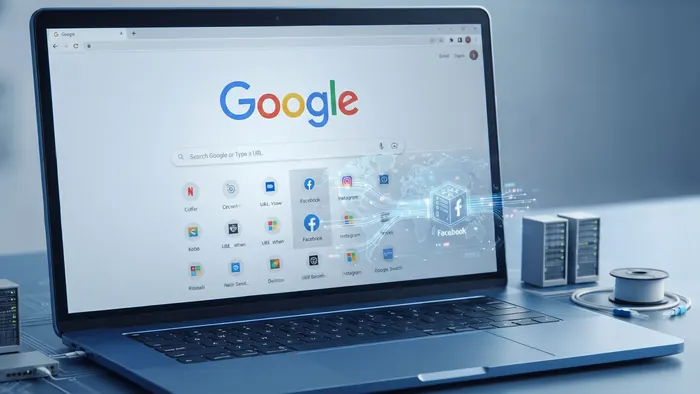
If you follow digital news at the end of 2026, you have probably noticed a major change on your screens: Google no longer just offers a list of blue links. For more and more searches, it writes the answer directly at the top of the page, using its artificial intelligence.
The search engine is becoming an answer engine. For businesses and content creators, the question is simple: how do you keep attracting visitors if Google gives the answer before the first click?
1. The “zero-click” phenomenon is accelerating
Simple, informational questions (a firing temperature, the definition of bounce rate…) are now answered in the AI-generated summary. Users read the summary and leave, often without visiting any website.
- Less curiosity traffic: expect traffic to drop on pages that answer a quick question. Visitors looking for a simple definition click less and less.
- Better-qualified visitors: that is the good news. Users who scroll below the summary and click your link are looking for in-depth expertise. This “surviving” traffic is smaller, but it generally converts better.
2. The response: moving from SEO to AEO
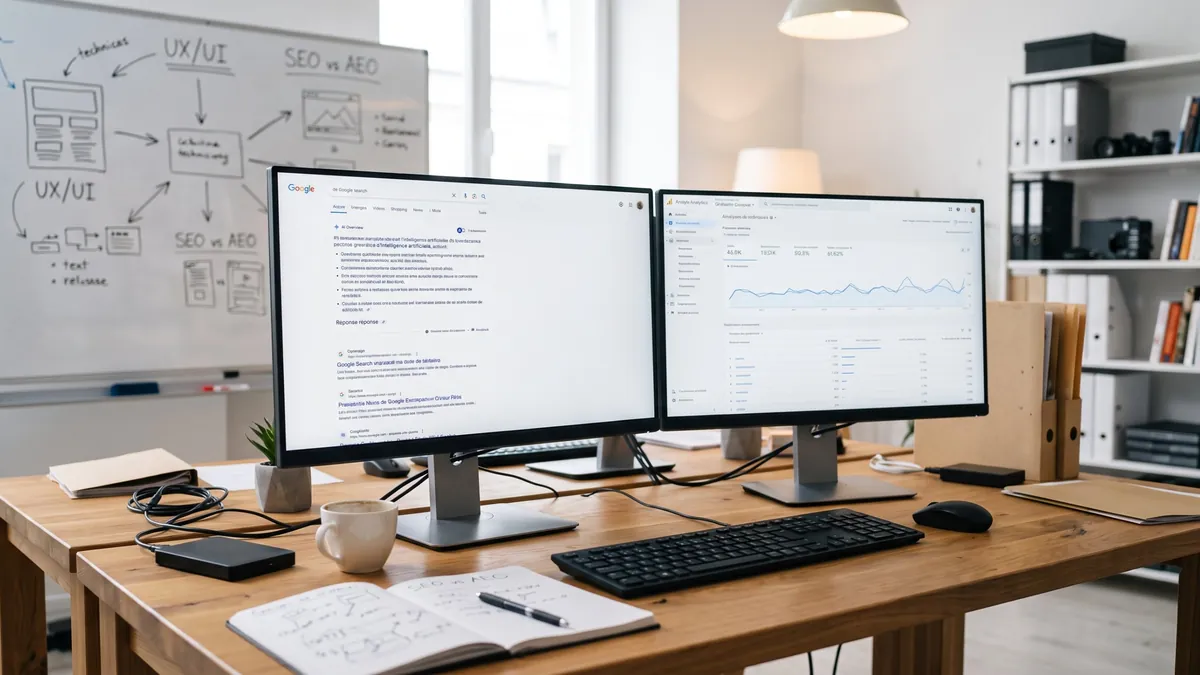
Search engine optimisation (SEO) must now coexist with AEO (Answer Engine Optimization), which we cover in detail in our article on AEO. For Google's AI to cite your business among its sources, your content must be easy to understand and extract:
- The question-and-answer format: structure your service pages and articles with subheadings (H2 tags) phrased as real questions, followed by a direct answer in one or two sentences, before going into depth.
- Structured data (Schema.org): this markup clearly tells machines who you are, your services, your reviews, your authors and your FAQ. Google states that no special markup is required to appear in its AI summaries, so it promises nothing in that respect. But clean data that is consistent with the visible content helps search engines understand your website and remains a sound technical foundation.
- A properly indexable page: AI can only cite what Google has been able to crawl and index. Speed, structure and the absence of technical errors remain the foundation.
3. People and hands-on experience as the best defence
Artificial intelligence excels at summarising existing information. It is far less comfortable providing new data, a reasoned opinion or lived experience. That is where your content makes the difference, by embodying the E-E-A-T criterion (experience, expertise, authoritativeness, trustworthiness), which we discussed in connection with the latest spam update:
- Show what you have lived: real case studies, specific customer feedback, figures from your own business, photos of your work rather than stock images (see the example in our article on selling custom products online).
- Highlight your authors: a signed article, with its author's background and face, inspires far more trust than an anonymous text. An AI cannot claim 20 years of experience in a trade; you can.
Conclusion
SEO is not dead: it requires a step up in technical and editorial quality. The era of filler articles is over; it is time for real expertise and flawless technical foundations. To go further, also read our article on SEO in the age of conversational AI.
Is your website ready to be cited by Google's new AI interfaces? Contact us for a full AEO audit of your website and content.
Frequently asked questions
What is a “zero-click” search?
It is a search that ends without a click to any website: users find their answer directly on Google's page, in the AI-generated summary or in a box.
Does structured data guarantee being cited by Google's AI?
No. Google states that no particular markup is needed to appear in its AI summaries. Structured data helps search engines understand your website, but the quality and clarity of the content come first.
Should you still write blog articles?
Yes, but differently: fewer generic texts answering simple questions, more expert content illustrated by your real experience, which AI cannot summarise without citing you.

A website, SEO or another request?
Design, redesign, SEO, maintenance, AI assistant or just a question: let's talk. Free quote and quick reply.
Request a quote or contact us