Will AI and new search engines kill e-commerce websites?
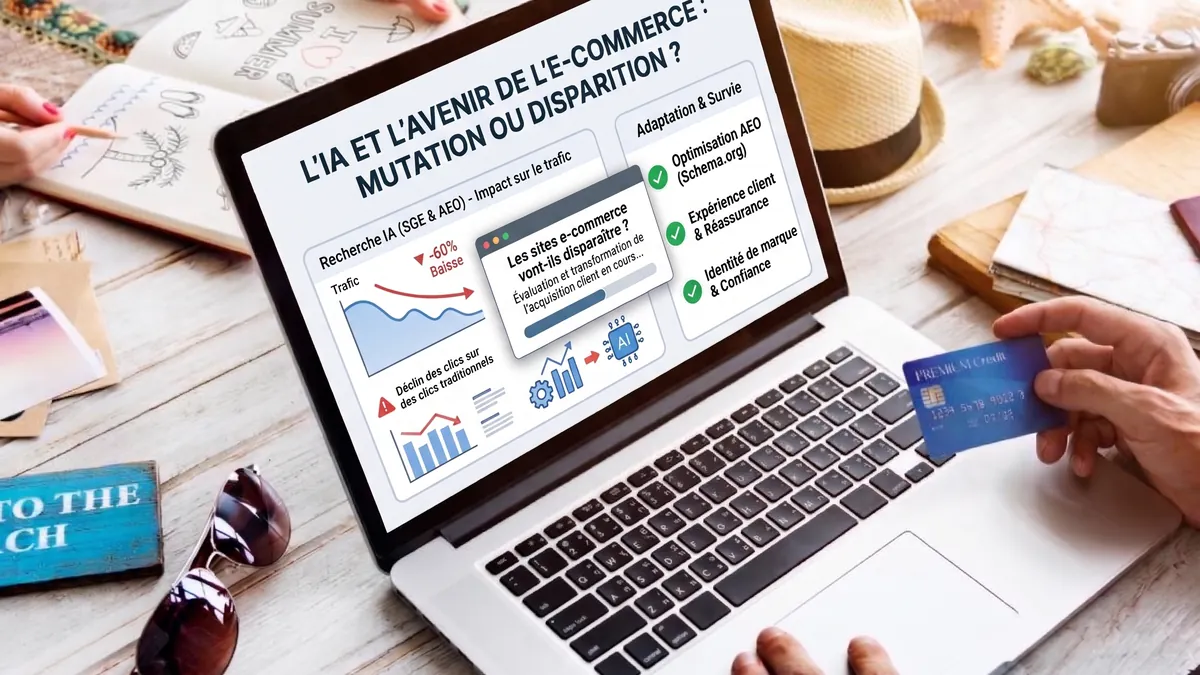
With Google's AI-generated summaries (AI Overviews) and the arrival of conversational engines such as ChatGPT Search, a legitimate worry is growing among online retailers: if artificial intelligence gives the answer directly and recommends products itself, will users still need to visit our shops?
The short answer is no: e-commerce websites are not going to disappear. The simple “catalogue” website model, however, is living on borrowed time. Here is why online retail is going to change, and how your business can come out ahead.
1. The decline of shops without added value
For a long time, a shop could survive by importing a product feed, applying a markup and buying keywords on Google Ads. That model is running out of steam.
- AI compares better than you do: if your product page merely repeats the standard specifications of a TV or a drill, AI summarises them faster than any visitor, comparing offers from across the web.
- Few reasons to cite you: an answer engine looks for sources that add something. Without your own advice, solid customer service or exclusives, your website has little chance of being featured in its recommendations. The “zero-click” phenomenon hits these interchangeable pages first.
2. AI recommends, but the brand reassures… and sells
Finding a product through AI and buying it are two different things. Artificial intelligence has no after-sales service, does not handle returns and does not guarantee delivery.
- The need for trust: when it is time to take out their card, buyers need reassurance. They will use AI to narrow things down (“which stencil should I choose for floor marking?”), then click through to the supplier's website to check it is a real company: address, customer reviews, a reachable phone number, return conditions.
- Complex orders: as we saw with selling custom-made products, AI does not replace a configurator or a technical order form. It sends the buyer to your website to complete the purchase.
3. The action plan: become the source AI wants to cite
To thrive in the era of AEO (Answer Engine Optimization), your shop must become a reference source, the one AI uses to build its answers.
- Flawless product data: Schema.org markup on your product pages (price, availability, shipping costs, reviews) and a product feed in Google Merchant Center, which feeds the Shopping tab for free, let search engines read your offers unambiguously. Google does not promise that markup alone gets you cited, but incomplete or contradictory information clearly works against you.
- Experience-based content: stop just describing your products and show them in action. Video tests, real tutorials, honest comparisons produced by your teams: AI can read a spec sheet, but it cannot test a tool on a building site. This lived experience, the first “E” in E-E-A-T, is what makes you a credible source.
- The brand: when people search for your name directly rather than the product's, you have won. Loyalty and brand identity are the best defences against automation.
Conclusion
Artificial intelligence will not make e-commerce disappear: it will sort the wheat from the chaff. Mere resellers without added value will suffer, while true experts, manufacturers and brands offering a genuine customer experience will gain visibility. The technical basics remain essential: see our 4 pillars of WooCommerce SEO.
Is your shop ready to be understood and cited by the new search engines? Contact us to adapt your WooCommerce website to the demands of AEO.
Frequently asked questions
Will AI replace e-commerce websites?
No. It helps people choose, but purchase, payment, delivery and after-sales service remain on the seller's website. It is mainly shops without added value that lose traffic.
How can my products appear in AI answers?
By publishing complete, consistent product information (Schema.org markup, Google Merchant Center feed) and useful content AI cannot find elsewhere: tests, advice and comparisons produced by your teams.
Is Google Merchant Center paid?
Signing up and appearing in the free listings of the Shopping tab is free. Only sponsored Shopping ads are paid.

A website, SEO or another request?
Design, redesign, SEO, maintenance, AI assistant or just a question: let's talk. Free quote and quick reply.
Request a quote or contact us