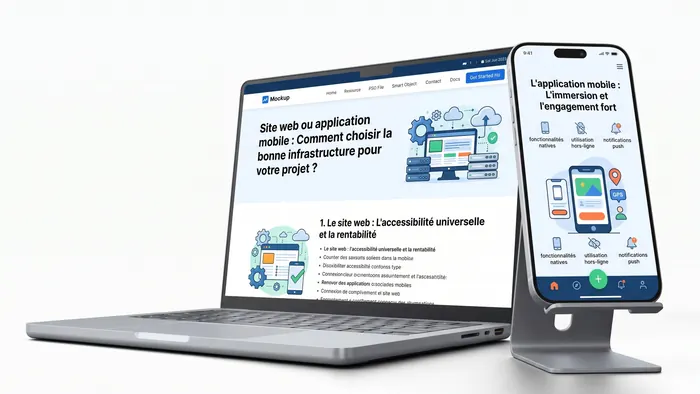
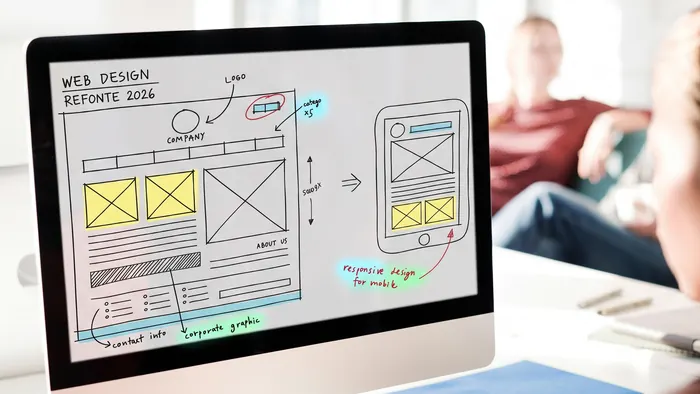
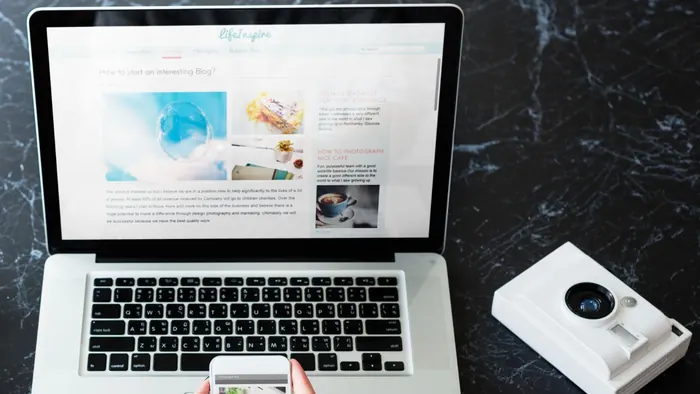
The PWA (Progressive Web App): the best of both worlds between website and mobile app
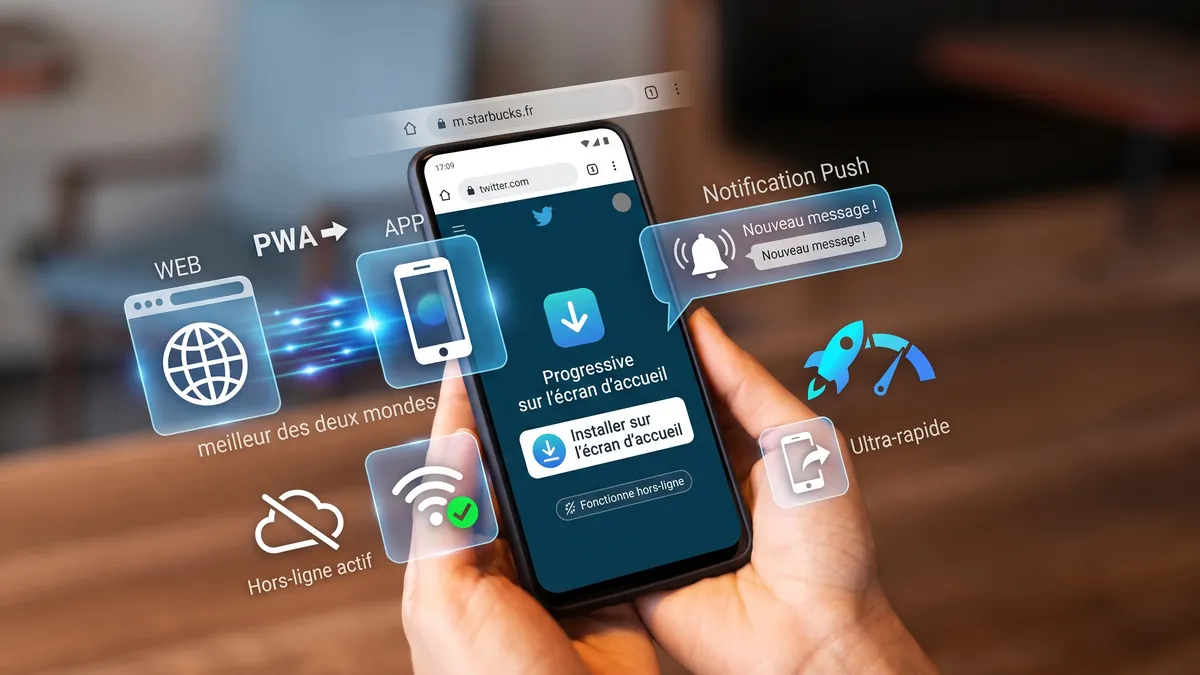
Hesitating between building a website and developing a mobile app? There is a third way, still too little known: the PWA (Progressive Web App).
Used by companies such as Twitter (X), Pinterest and Starbucks, this hybrid technology delivers the experience of a mobile app directly from a web browser. What is a PWA, and why could it be the smartest choice for your business? Let's take a look.
1. What is a Progressive Web App?
Put simply, a PWA is a website enhanced with modern technologies that allow it to behave like an app installed on a smartphone.
It is called “progressive” because it works for all users, whatever their browser, while offering an increasingly rich experience on recent devices.
2. Game-changing features
The PWA pushes back the boundaries of the web with features once thought to be reserved for app store apps:
- Installation on the home screen: without going through the App Store or Google Play, users add your website to their phone in a few taps. It then opens full screen, without the browser bar, just like a real app.
- Offline mode: thanks to service workers (scripts running in the background), the PWA stores essential data. Your users can browse your content, your catalogue or their basket even on the underground or in a dead zone.
- Push notifications: you send alerts and messages directly to your users' screens to bring them back, just as with a traditional app.
- Remarkable speed: lightweight and optimised, PWAs display almost instantly – a major asset for user experience and conversion rate.
3. Why choose a PWA? The strategic advantages
- A controlled budget: instead of developing a website, an iOS app and an Android app, you develop a single product. Development, maintenance and update costs are significantly reduced.
- Easier user acquisition: no need to convince a prospect to go to a store, enter a password, wait for the download and fill up their phone's memory. They just need to visit your website.
- The power of SEO and AEO: unlike traditional apps, which are almost invisible on Google, a PWA is a website. It can therefore be indexed by search engines and AI engines to capture free organic traffic.
Comparison table: traditional website, PWA or native app
| Criterion | Traditional website | PWA | Native app |
|---|---|---|---|
| Access / installation | Browser only | Browser or home screen | Download from a store |
| Offline | No | Yes (partially or fully) | Yes |
| Push notifications | No | Yes (Android, recent iOS once installed) | Yes |
| SEO / AI visibility | Excellent | Excellent | Very limited |
| Development cost | Affordable | Moderate, excellent value for money | High |
Conclusion
The PWA is the ideal answer for businesses that want the comfort, interactivity and loyalty of a mobile app, without its high costs or the difficulty of getting people to download an app. To compare all the options, also read our article Website or mobile app: how to choose?
Would you like to turn your website into a fast Progressive Web App that is accessible everywhere? Contact us to assess the feasibility of your project.
Frequently asked questions
Does a PWA work on iPhone?
Yes. On iPhone, you install it from Safari via “Share” then “Add to Home Screen”. Push notifications have been supported since iOS 16.4, provided the PWA is installed.
Can a PWA be published on the app stores?
Yes, it is possible on Google Play and, with a few adaptations, on the App Store. But it is not mandatory: the whole point of a PWA is to be accessible directly from your website.
Can you turn a WordPress website into a PWA?
Yes. An existing WordPress website can be turned into a PWA by adding a manifest, a service worker and icons, provided the website is already fast and well designed for mobile.

A website, SEO or another request?
Design, redesign, SEO, maintenance, AI assistant or just a question: let's talk. Free quote and quick reply.
Request a quote or contact us